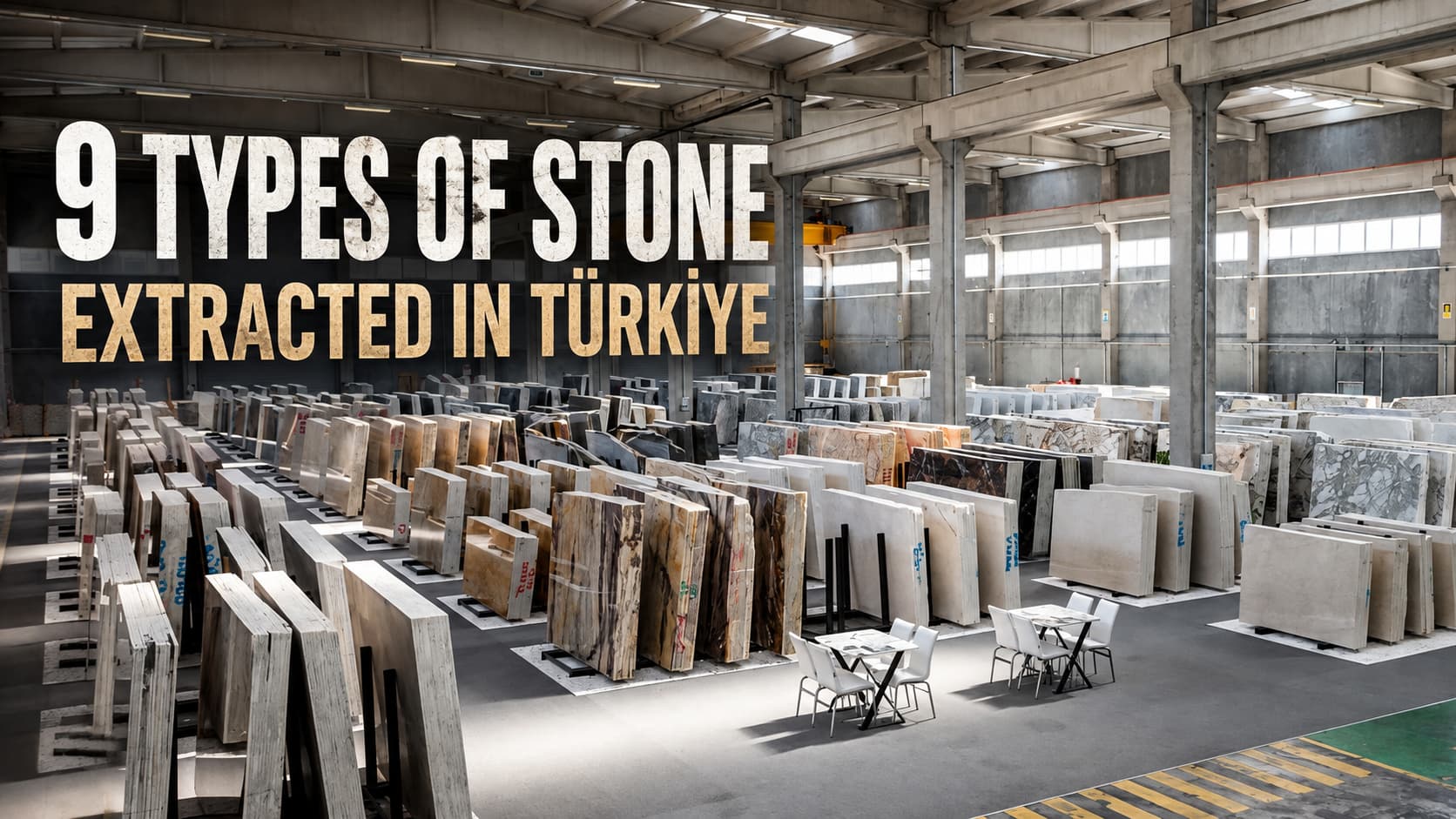
Türkiye is home to a remarkable variety of natural stones, including marble, travertine, limestone, onyx, basalt, granite, quartzite and diabase, shaped by its rich and diverse geological structure. Different regions offer specific stones with their own colours, textures, and characteristics.
In this article, we take a closer look at the main types of natural stone extracted in Türkiye, their characteristics, and their common uses.
What is Marble?
Marble is a metamorphic rock formed when limestone or dolomite is exposed to high temperatures and pressure. During this process, the minerals recrystallize and form the dense, interlocking structure characteristic of marble.
Marble occurs in a wide variety of white, cream, beige, grey, brown, red and darker tones, with veins and patterns depending on its mineral composition. It can be polished to a smooth surface and is valued for its natural patterns, workability and decorative appearance.
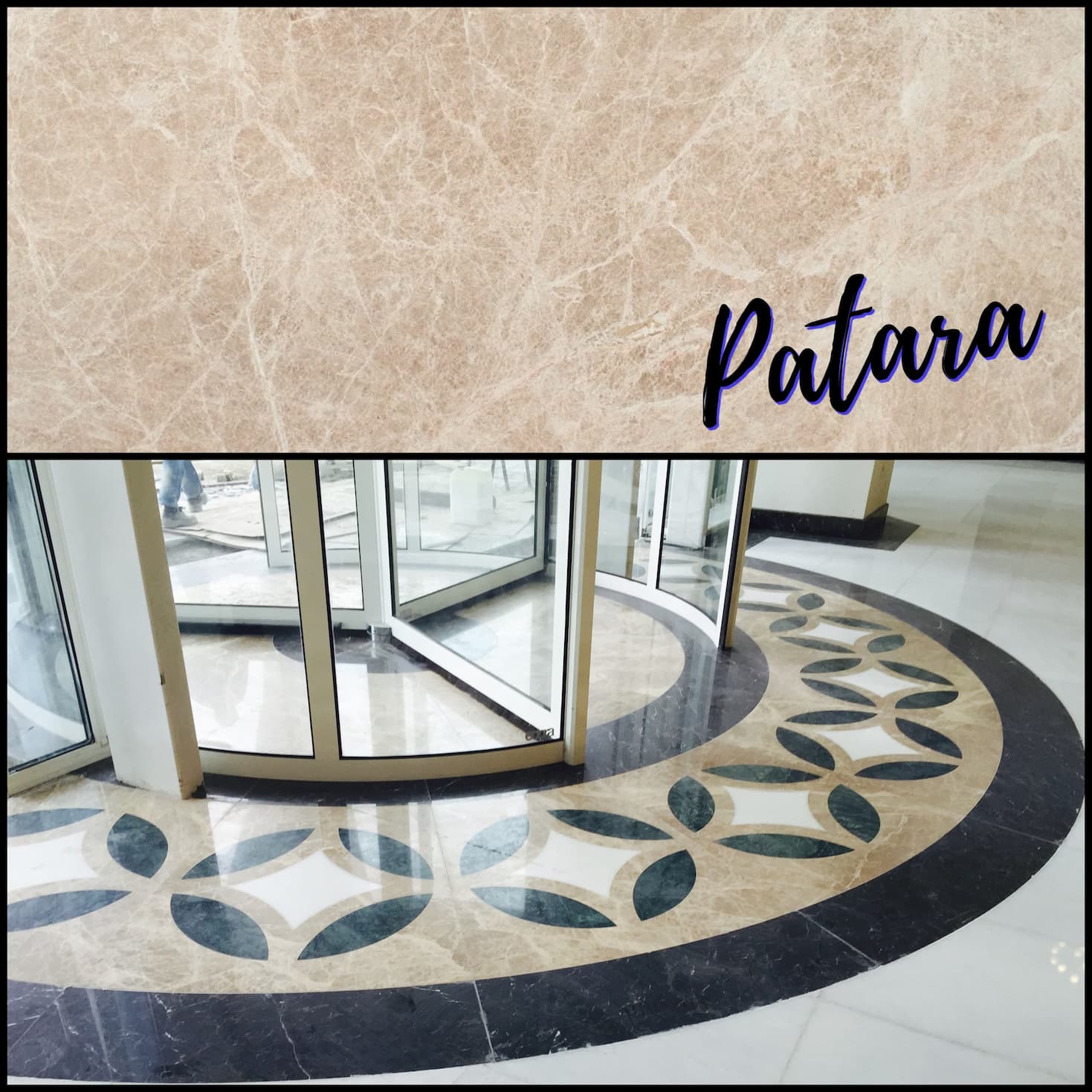
Common Uses of Marble
- Floors & Walls – Widely used for interior flooring, wall coverings and decorative surfaces.
- Stairs & Steps – Suitable for staircases where both durability and appearance are important.
- Bathrooms & Showers – Used for floors, walls, showers and other bathroom surfaces.
- Countertops, Sinks & Backsplashes – Can be fabricated into custom kitchen and bathroom elements.
- Hallways & Foyers – Frequently used in hotels, residences and public buildings to create distinctive entrance areas.
- Fireplaces – Suitable for simple surrounds as well as carved mantels and decorative details.
- Columns – Traditionally used in temples, palaces, mosques and monumental architecture.
- Paving & Outdoor Areas – Suitable varieties and finishes can be used for exterior paving, stairs and cladding.
- Sculptures & Decorative Objects – Its workability makes it suitable for statues, fountains, tables, vases and carved pieces.
What is Travertine?
Travertine is a sedimentary stone formed by the precipitation of calcium carbonate from mineral-rich water, particularly around springs and other carbonate-rich water systems. Gas and water movement during its formation creates the characteristic holes and pores visible in the stone.
Travertine is commonly found in cream, beige, ivory, walnut, brown, silver and reddish tones. It can be cut vein-cut, revealing linear layers, or cross-cut, creating a more cloudy and irregular pattern. Its natural texture, warm colours and variety of surface finishes make it suitable for both interior and exterior architecture.
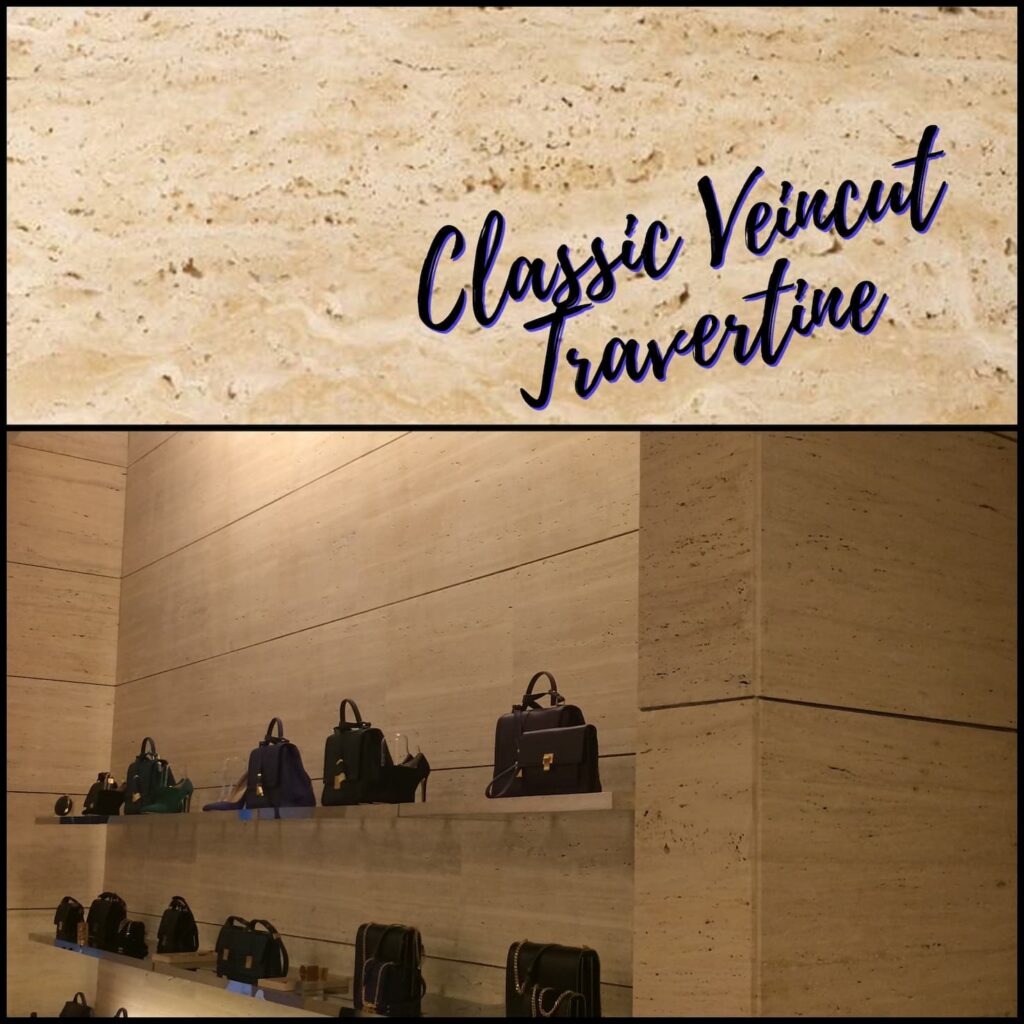
Common Uses of Travertine
- Flooring – Creates warm, natural-looking floors in residential and commercial spaces.
- Wall Cladding & Façades – Widely used for interior walls and exterior façades.
- Pool Decks & Copings – Textured and tumbled finishes are commonly used around swimming pools.
- Patios & Walkways – Travertine pavers work well for terraces, gardens and pathways.
- Stairs & Steps – Suitable for interior stairs, exterior steps and pool areas.
- Bathrooms & Showers – Its earthy colours work naturally in bathrooms and wet areas.
- Sinks & Countertops – Can be fabricated into sinks, vanity tops and other custom pieces.
- Fireplaces – Frequently used for fireplace surrounds because of its warm and natural appearance.
- Split-Face Walls – Rough and textured surfaces can create distinctive decorative walls.
What is Limestone?
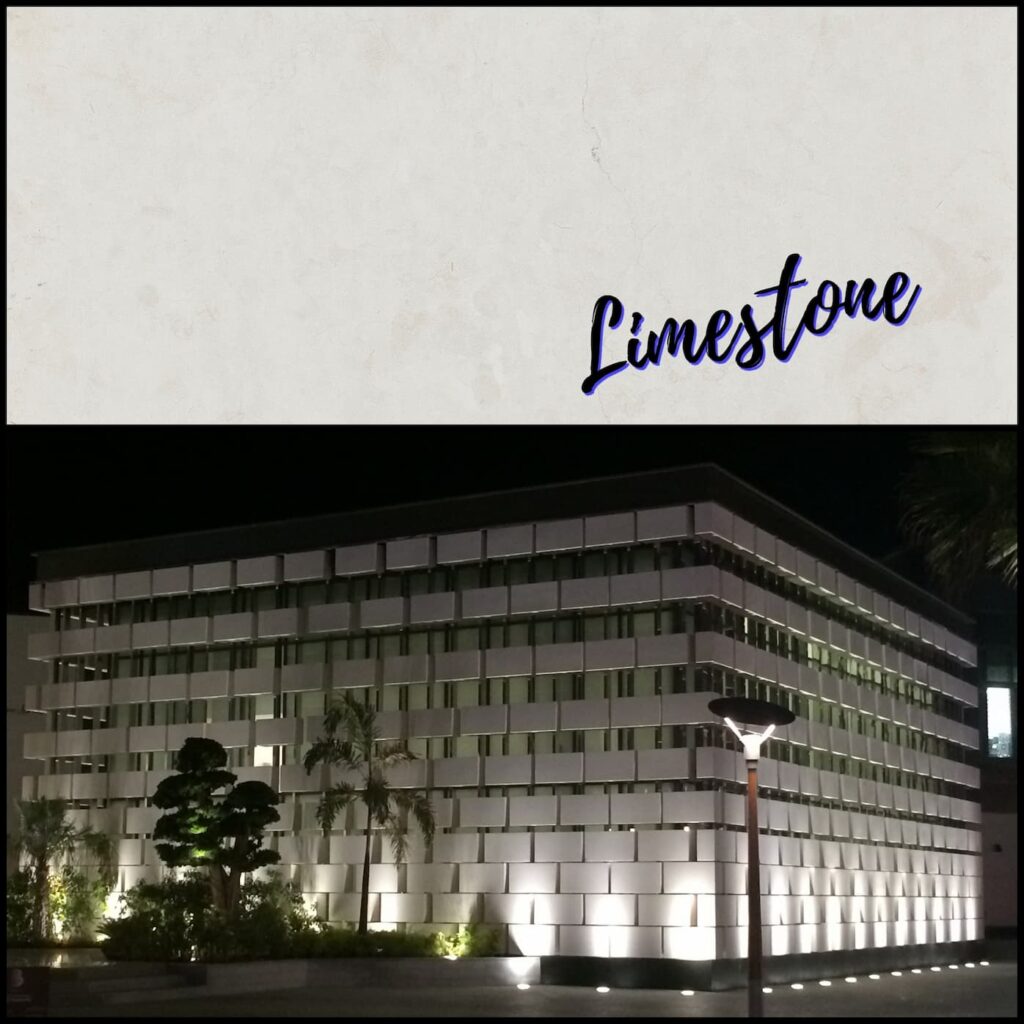
Limestone is a sedimentary rock mainly composed of calcium carbonate (CaCO₃). It commonly forms through the accumulation of shells, corals and other marine organisms, or through the precipitation of calcium carbonate from water.
Depending on where and how it forms, limestone may contain fossils, silica, sand, clay or other minerals, creating different textures and appearances. Architectural limestone is commonly found in white, cream, beige, grey and brown tones. Its relatively workable structure makes it suitable for cutting, carving and architectural detailing.
Common Uses of Limestone
- Wall Cladding & Façades – Frequently used for natural-looking exterior and interior walls.
- Flooring – Suitable for residential, commercial and public spaces.
- Stairs & Architectural Details – Can be fabricated into stairs, window surrounds, columns and mouldings.
- Bathrooms & Vanity Tops – Neutral colours make it suitable for bathroom surfaces and interiors.
- Landscaping & Paving – Selected varieties can be used for terraces, pathways and garden walls.
- Furniture & Decorative Elements – Used for tables, benches, fireplaces and custom architectural pieces.
- Cement & Construction Materials – Limestone is also an important raw material for cement, lime and aggregates.
What is Onyx?
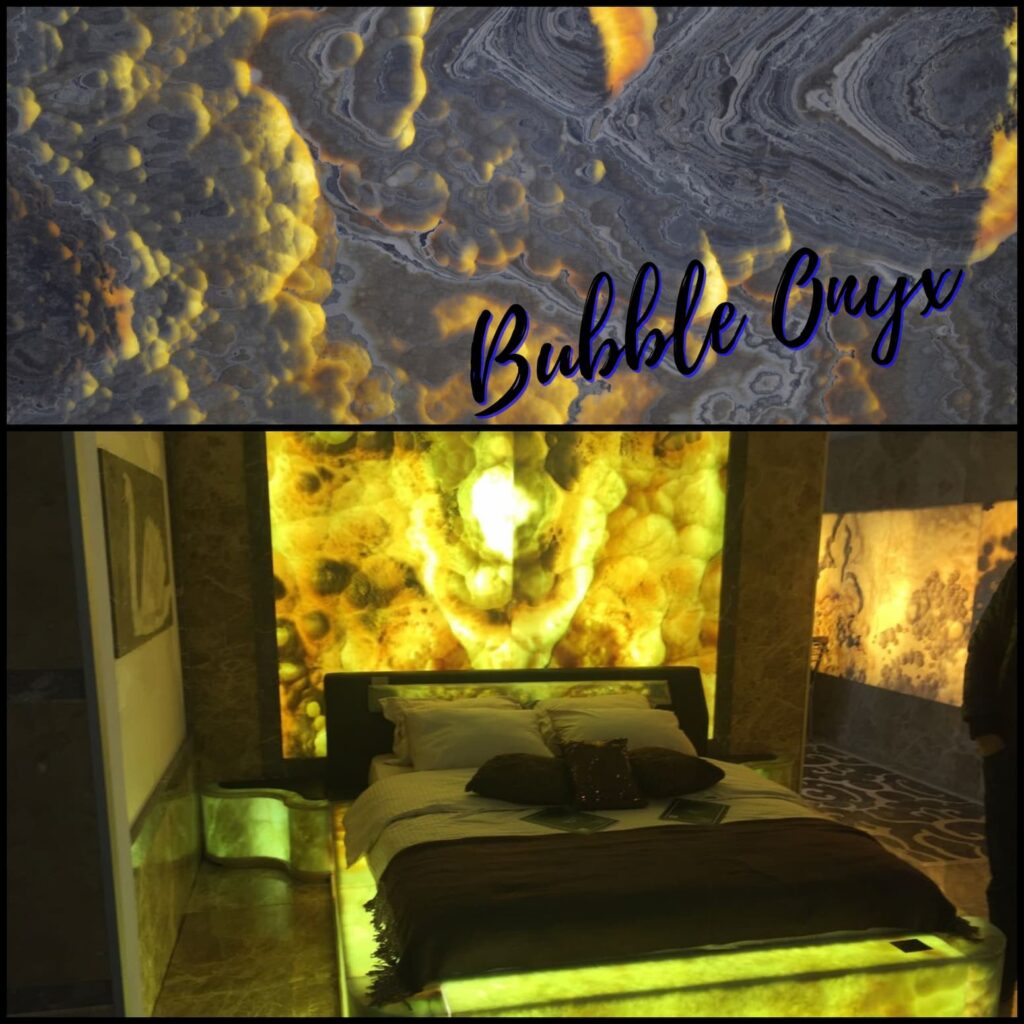
The stone commonly sold as onyx in the natural-stone industry is a calcium-carbonate stone formed by the precipitation of mineral-rich water, often associated with springs and caves. This gradual deposition creates its distinctive crystalline and layered structure.
One of the most important characteristics of onyx is its translucency, which allows light to pass through thinner slabs. It occurs in striking white, cream, yellow, honey, green, red and brown tones, often with flowing bands and dramatic natural patterns. Because of its translucency and appearance, onyx is used primarily as a decorative stone rather than for heavy-duty applications.
Common Uses of Onyx
- Wall Cladding – Often backlit to highlight the stone’s colours, layers and translucency.
- Column Cladding – Creates decorative feature columns in luxury interiors.
- Bar & Reception Desks – Backlighting can turn onyx counters and façades into focal points.
- Sinks & Vanity Elements – Used for distinctive decorative pieces in bathrooms and interiors.
- Decorative Panels – Large slabs are particularly effective for illuminated feature walls.
- Lobbies & Lounges – Frequently used as a statement material in hotels and public spaces.
- Fireplaces – Adds strong colour and natural patterns to fireplace surrounds.
- Decorative Objects – Smaller pieces can be used for vases, figurines, bowls and other ornamental objects.
What is Granite?
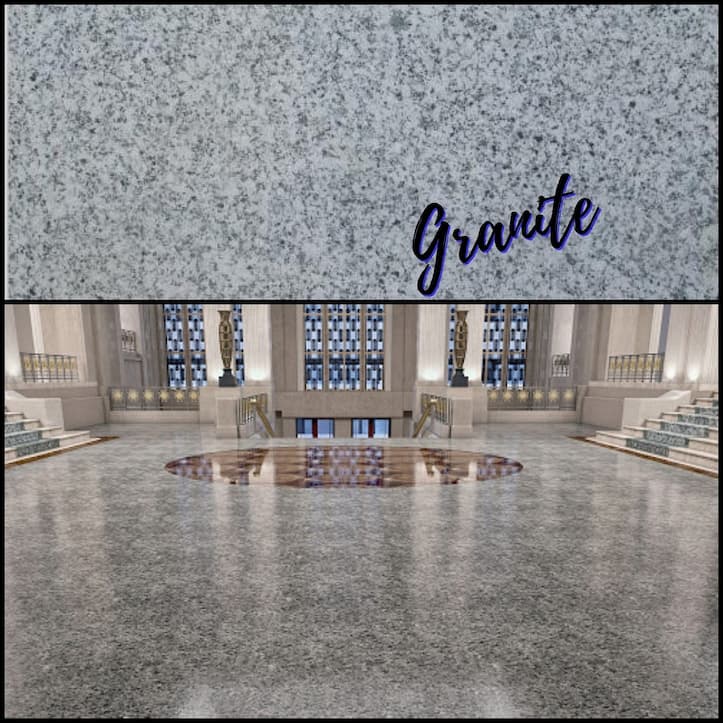
Granite is a coarse-grained igneous rock formed when magma cools slowly beneath the Earth’s surface. The slow cooling allows large mineral crystals to develop, giving granite its characteristic visible grain.
It is mainly composed of quartz and feldspar, with smaller amounts of mica, amphiboles and other minerals. Different mineral combinations produce colours ranging from white, cream and pink to grey and black. Granite is particularly valued for its hardness, durability and resistance to wear, making it suitable for demanding interior and exterior applications.
Common Uses of Granite
- Floors & Walls – Suitable for high-traffic interior and exterior surfaces.
- Stairs & Steps – Its hardness allows it to withstand frequent use.
- Countertops & Backsplashes – Popular for kitchens because of its durability and polished finish.
- Bathroom Vanity Tops & Basins – Provides durable and decorative bathroom surfaces.
- Façade Cladding – Suitable for exterior walls and architectural applications.
- Paving – Commonly used for plazas, walkways and public areas.
- Fireplaces – Suitable for both interior and exterior fireplace surrounds.
- Monuments & Gravestones – Valued for its durability and resistance to weathering.
- Outdoor Countertops – Frequently used for outdoor kitchens and entertainment areas.
What is Basalt?
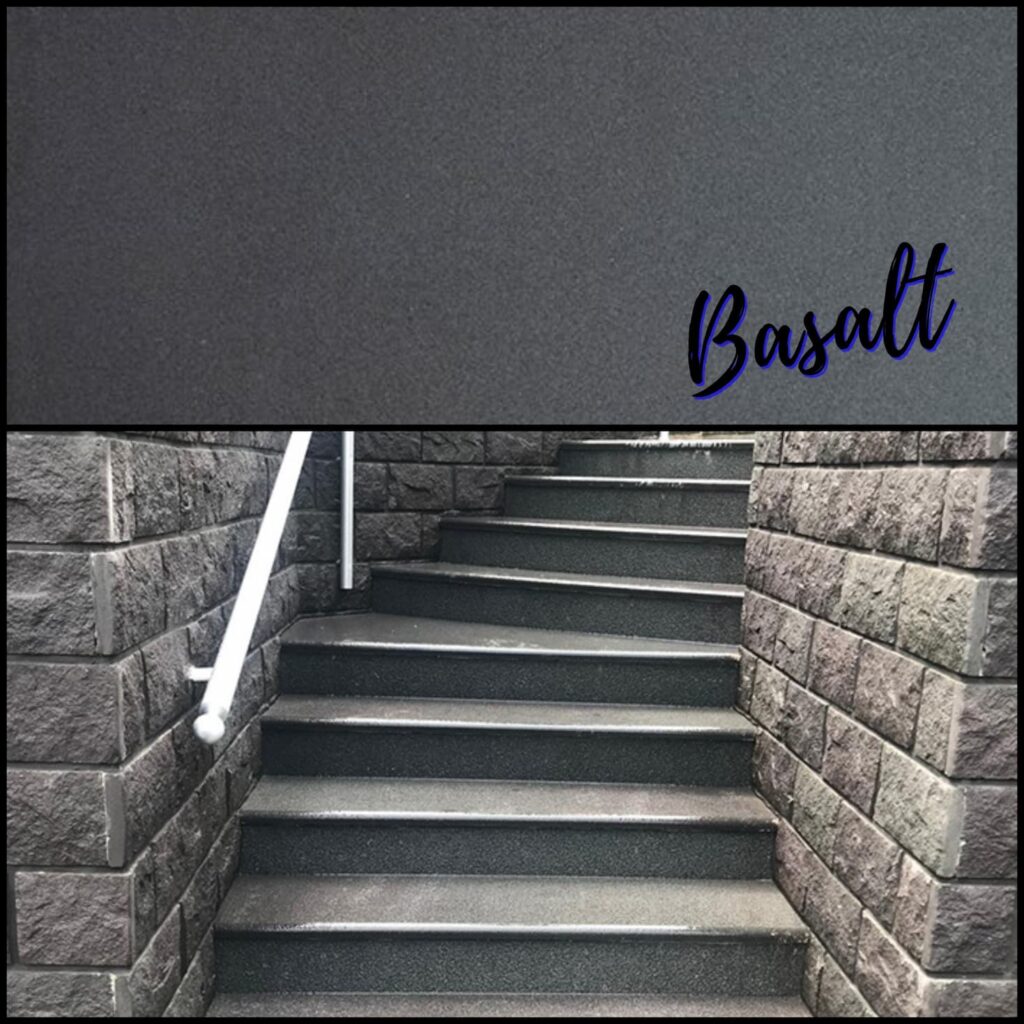
Basalt is a dark-coloured, fine-grained volcanic igneous rock formed when lava cools relatively quickly at or near the Earth’s surface. In some locations, cooling and contraction create distinctive hexagonal basalt columns.
Basalt is mainly composed of plagioclase and pyroxene, together with iron-rich minerals that contribute to its characteristic dark grey to black colour. Its dense structure, strength, wear resistance and relatively uniform appearance make it particularly suitable for paving, landscaping and other demanding applications.
Common Uses of Basalt
- Flooring – Suitable for high-traffic interior and exterior areas.
- Cobblestones – Frequently used for streets, plazas, pathways and driveways.
- Paving & Cube Stones – Cut into regular formats for courtyards, pedestrian areas and public spaces.
- Stairs & Steps – Its strength and wear resistance make it suitable for heavily used stairs.
- Landscaping – Used for garden paths, borders, walls and decorative landscape features.
- Natural Columns – Naturally formed basalt columns can be incorporated into landscape designs.
- Massage Stones – Smooth basalt stones are used for hot-stone massage because of their ability to retain heat.
- Insulation Material – Basalt can also be processed into mineral wool for thermal and acoustic insulation.
What is Andesite?
Andesite is a fine-grained volcanic igneous rock with a composition generally between basalt and rhyolite. It forms from lava associated particularly with volcanic regions and tectonic plate subduction zones.
It is mainly composed of plagioclase feldspar, together with minerals such as pyroxene, hornblende and biotite. Andesite commonly appears in grey, brown, reddish, pink and purple-grey tones, depending on its mineral composition. Its combination of strength, durability and workability has made it a widely used building and paving stone.
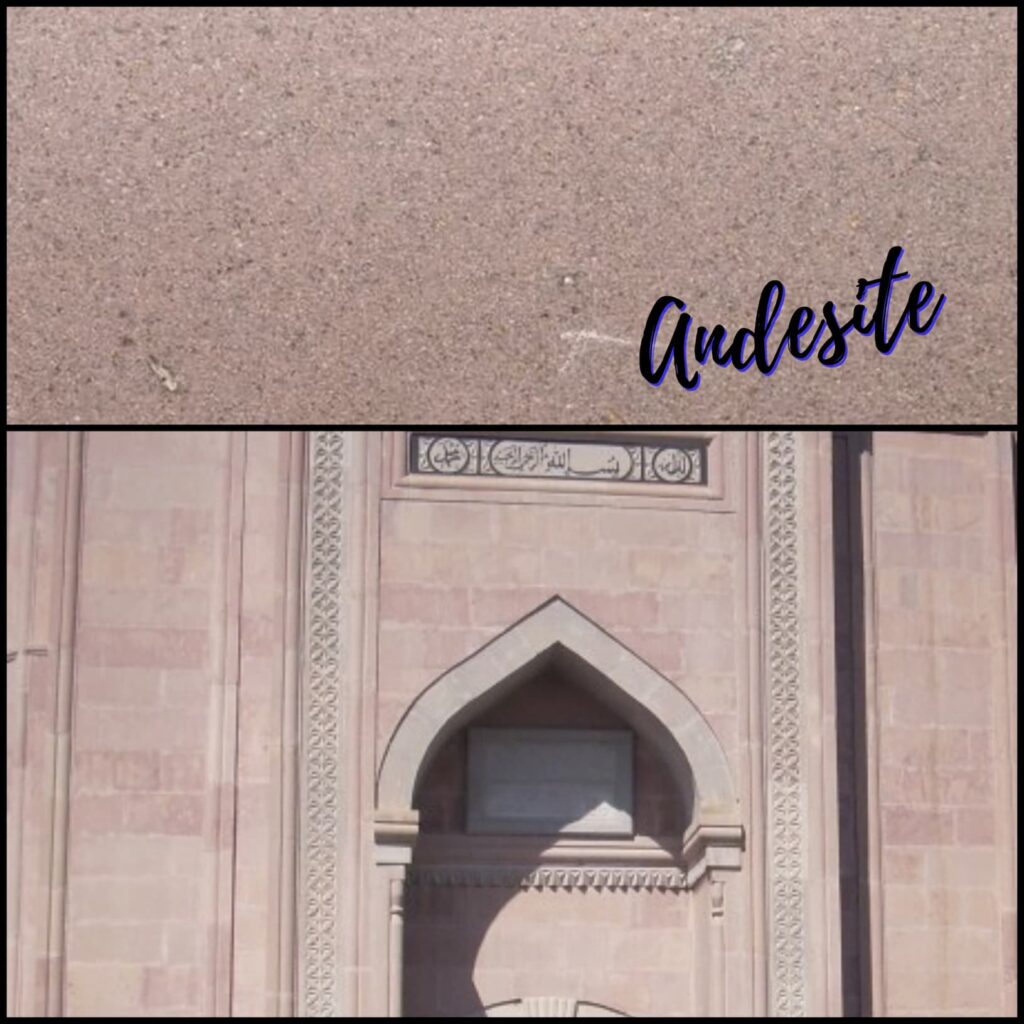
Common Uses of Andesite
- Flooring – Particularly suitable for durable exterior floors and public areas.
- Cladding – Used for building façades, exterior walls and architectural surfaces.
- Paving – Suitable for plazas, pedestrian areas, terraces and courtyards.
- Cobblestones – Used for streets, pathways and traditional paving.
- Stairs & Steps – Provides a durable surface for exterior stairways.
- Landscaping – Used for paths, borders, garden walls and other landscape elements.
- Decorative Products – Its natural colour and texture make it suitable for architectural and decorative pieces.
Quartzite
Quartzite is a hard metamorphic rock formed when quartz-rich sandstone is transformed by heat and pressure. During this process, the quartz grains recrystallize and bond together, creating an extremely strong and wear-resistant stone.
Quartzite occurs in colours including white, grey, beige, gold, brown, green and reddish tones, depending on the minerals present. Its hardness, natural texture and resistance to wear make it particularly suitable for flooring, paving and landscaping. Quartzite can also be naturally split into flagstone, producing irregular or rectangular pieces with textured surfaces.
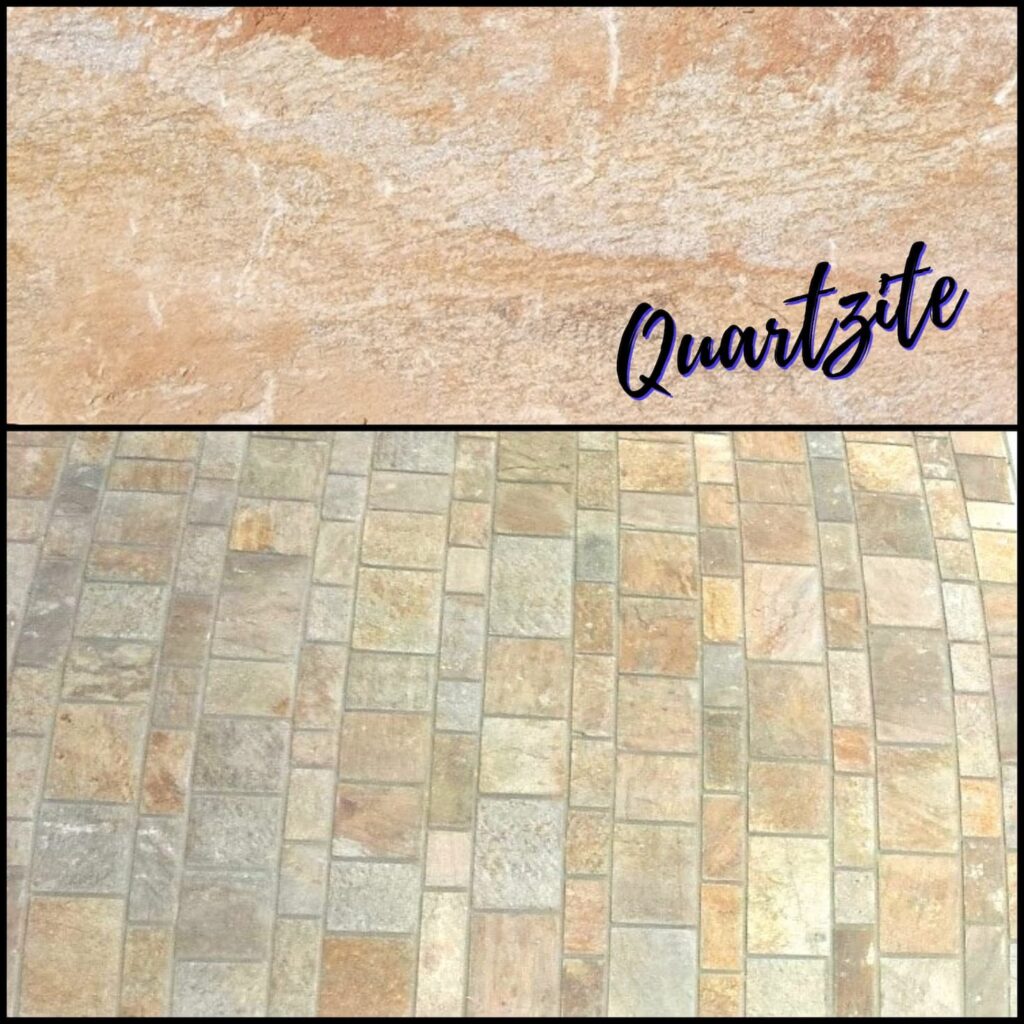
Common Uses of Quartzite Flag Stone
- Flooring – Its hardness makes it suitable for high-traffic areas.
- Patios & Terraces – Quartzite flagstone creates durable and natural-looking outdoor surfaces.
- Walkways & Garden Paths – Natural split pieces work particularly well in landscape designs.
- Pool Surrounds – Textured finishes can provide a practical surface around pools.
- Wall & Façade Cladding – Used to create natural-textured architectural surfaces.
- Landscaping – Suitable for paths, borders, garden walls and decorative features.
- Steps & Stairs – Thick pieces can be fabricated into durable exterior steps.
- Decorative Walls – Different sizes and natural colour variations can create distinctive patterns.
What is Diabase?
Diabase, also known as dolerite, is a medium-grained igneous rock formed when magma cools beneath or close to the Earth’s surface. Its rate of cooling gives it a texture generally coarser than basalt but finer than gabbro.
It is mainly composed of plagioclase and pyroxene and commonly occurs in dark grey, black and greenish-grey tones. Diabase is known for its high strength, hardness and resistance to abrasion, making it particularly suitable for demanding architectural, paving and landscaping applications.
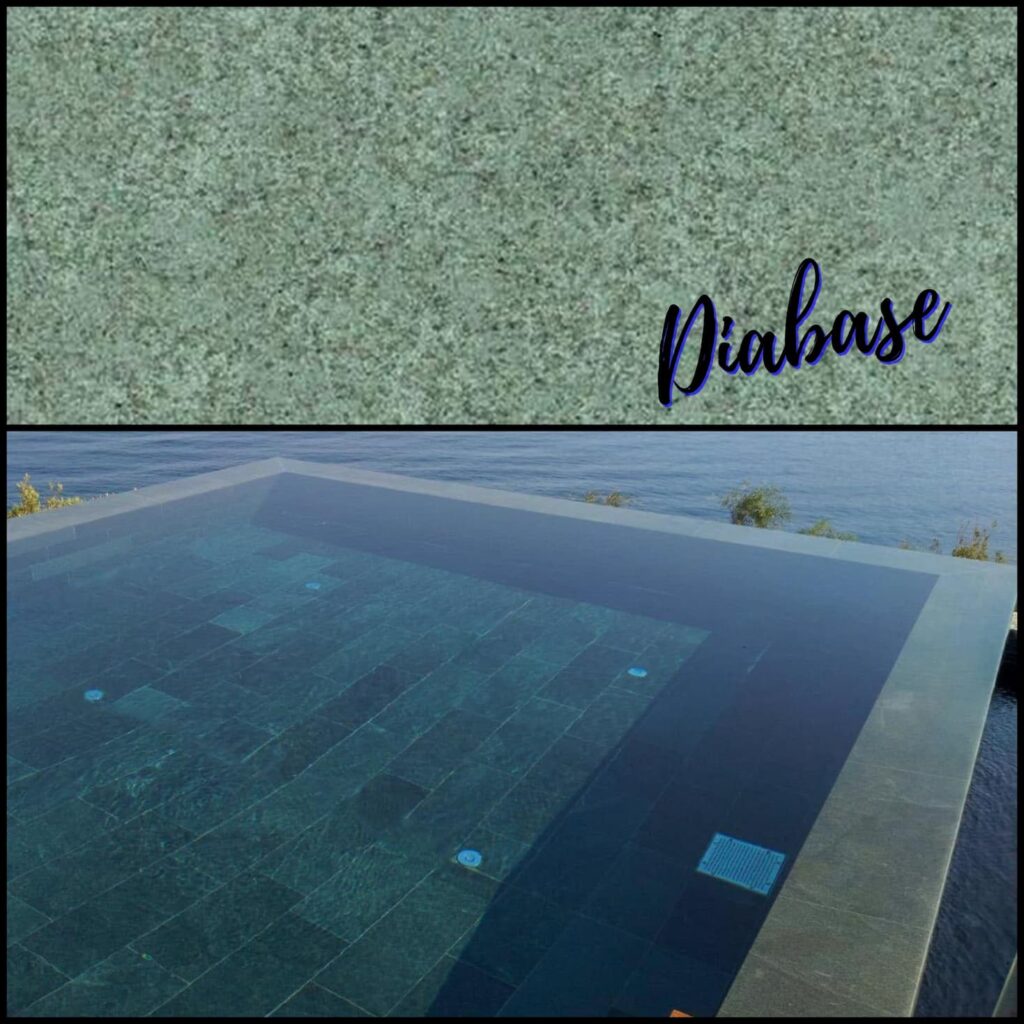
Common Uses of Diabase
- Flooring – Suitable for high-traffic areas because of its hardness and durability.
- Paving – Used for plazas, streets, walkways and other exterior surfaces.
- Stairs & Steps – Provides a strong and wear-resistant surface.
- Wall & Façade Cladding – Its dark and greenish tones create a distinctive architectural appearance.
- Pool Areas – Suitable finishes can be used for pool surrounds and other outdoor surfaces.
- Landscaping – Used for pathways, borders and decorative landscape elements.
- Cobblestones & Cube Stones – Cut into smaller formats for durable exterior paving.
- Crushed Stone & Aggregate – Also used for roads, railway ballast and other infrastructure applications.
At Pikas Stone, we supply premium Turkish natural stone for residential, commercial, hospitality, and public projects worldwide. Whether you are looking for marble, travertine, limestone, granite, or other natural stones, our team is ready to help you select the right material for your project.
Choosing the Right Turkish Natural Stone
For elegant interiors: Marble
For warm, natural façades and pools: Travertine
For translucent decorative features: Onyx
For demanding exterior areas: Granite/Basalt
For light architectural façades: Limestone
For landscaping: Andesite/Quartzite/Diabase
At Pikas Stone, we supply premium Turkish natural stone for residential, commercial, hospitality, and public projects worldwide. Whether you are looking for marble, travertine, limestone, granite, or other natural stones, our team is ready to help you select the right material for your project.
Contact us today to discuss your project, request samples, or learn more about our sustainable natural stone solutions.
One response to “Discover the Rich Variety of Turkish Natural Stones”
Güzel bir yazı. Teşekkürler